When Jenna noticed her water bill spike after the long, hot July stretch, she walked the yard with a notebook: patchy turf by the driveway, a thirsty tomato patch in the raised beds, and a line of sunflowers wilting in containers. She already had an old mechanical timer that watered on a fixed schedule, but the system soaked sidewalks and left vegetable roots dry. The problem was clear — the right watering method for each zone was missing. The solution was choosing the correct smart irrigation setup for each area so she could stop wasting water and cut bills.
Why matching the system to the problem saves money
Not every watering need is solved by a single product. A one-size-fits-all sprinkler running too long will overspray on sidewalks, promote runoff, and waste water — and those gallons show up on your monthly bill. Smart irrigation addresses the waste source by tailoring when and how water is applied. According to the EPA, smart irrigation controllers can save homeowners up to 15% on outdoor water use; in some climates that can equal thousands of gallons per year (EPA WaterSense). University extension studies also report that drip systems can reduce landscape water use by 30–50% when compared with conventional sprinklers.
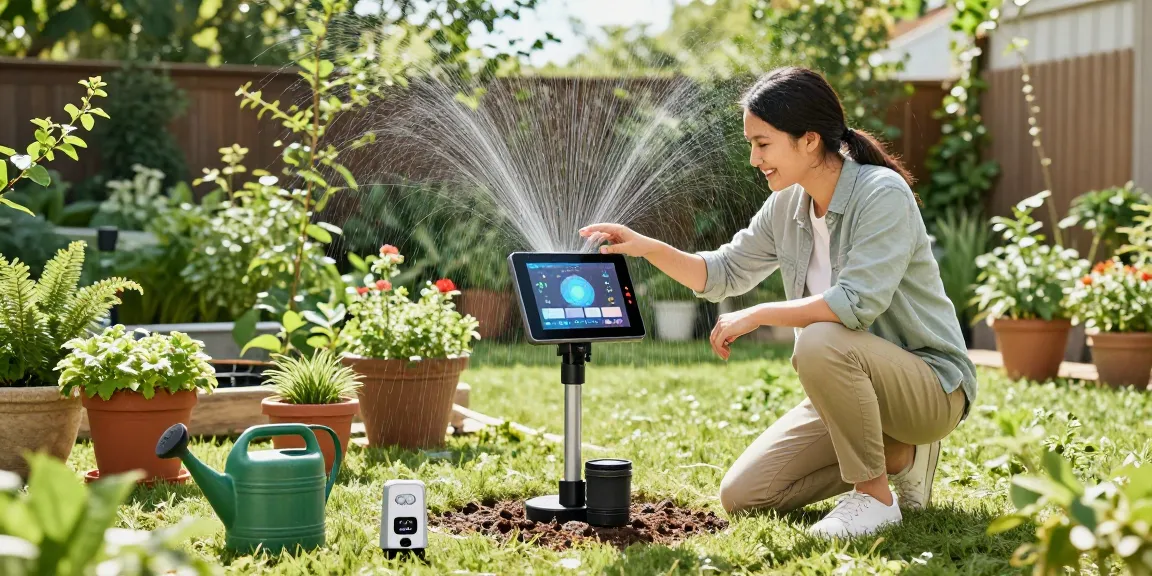
Match problems to systems: low-pressure, targeted watering fixes dripping container plants; high-coverage, weather-adjusting controllers suit large lawns. A WiFi timer such as a RainPoint model lets you schedule by zone and adjust run times remotely, avoiding needless cycles after rain. Learn more about tailored solutions at RainPoint smart irrigation helps lower water bills if you want a quick primer tied to specific product pairings.
Small lawn or patchy turf: mobile sprinklers and smart timers
Problem: A compact front lawn (up to ~1,000 sq ft) gets uneven coverage with a single in-ground head and tends to runoff on the sidewalk edges.
Solution: For small lawns, a set of mobile sprinkler heads combined with a WiFi sprinkler timer saves water and gives flexibility. Mobile sprinklers let you position heads away from pavement and water only the turf. Pairing that with a weather-aware timer reduces unnecessary cycles when it rains or when ET (evapotranspiration) is low.
Concrete example
Mark in Arizona swapped an old mechanical controller for a smart WiFi timer and used two oscillating heads on the lawn only, reducing run time by 20% due to seasonal adjustments — his irrigation drops from three 20-minute cycles to two 15-minute cycles per week, saving him roughly 6,000 gallons a year.
- Best for: tiny to small lawns, rental properties, temporary installs.
- Key feature: portability and targeted placement to avoid hardscapes.
- Why it saves: eliminates overwatering and avoids watering non-plant areas.
Large lawn: smart in-ground systems with weather-based control
Problem: A half-acre yard with multiple sprinkler zones running on long cycles, often watering during mid-day and not adjusting for recent rainfall.
Solution: Large lawns benefit from an in-ground system managed by a smart controller that reads local weather or soil moisture inputs and adjusts schedules automatically. These controllers make per-zone adjustments based on slope, soil type, and plant type. For example, shady north-facing zones need less water than sun-exposed slopes. A smart controller can reduce watering frequency and shorten run times where appropriate.
Concrete example and a simple comparison table
In a suburban Connecticut yard, switching to a weather-based controller cut seasonal irrigation time by 35%. The homeowner saw lawn health improve while the water bill dropped noticeably each month.
SystemTypical SavingsBest ForConventional timer0–10%Small, uniform lawnsWeather-based smart controller20–40%Medium to large lawnsSoil-moisture supplemented smart controller30–50%Lawns with varied microclimates
A WiFi timer from RainPoint can handle that schedule automatically, letting you fine-tune run times per zone from your phone.
Vegetable gardens and flower beds: drip and soaker solutions for root-zone efficiency
Problem: Overhead sprinklers wet leaves and pathways, leading to fungal issues and wasted water, while root zones remain under-watered.
Solution: Drip irrigation and soaker hoses apply water slowly at the root zone where plants need it most. For vegetables, micro-sprayers and drip lines deliver precise volumes directly to root crowns, which reduces evaporation and surface runoff. Flower beds with mixed perennials do well with soaker hose loops buried under 1–2 inches of mulch; that keeps water in the soil where roots can access it.
Concrete example
Lisa installed a drip kit in her raised vegetable beds with emitters set at 1 GPH per plant and watered for 30 minutes three times per week during summer. Soil probes showed consistent moisture in the root zone while her automated schedule used about half the water of the sprinkler she’d previously run for 15 minutes daily.
- Drip kit: best for precise, high-value edibles — reduces disease and saves water.
- Soaker hose: easy install for grouped flower beds — low cost, good coverage.
- Tip: use mulch over drip and soaker lines to cut evaporation by roughly 30%.
For gardeners who want a packaged solution, complete drip kits are available with pressure regulators, fittings, and timers pre-sized for bed square footage. The focused water delivery cuts waste and often lowers seasonal irrigation use by 30% or more according to state extension office guidance.
Potted plants and mixed containers: self-watering and micro-schedules
Problem: A balcony or patio with dozens of containers needs frequent hand-watering; some pots dry faster than others, leading to inconsistent plant health and wasted water from overcompensating.
Solution: Self-watering reservoirs, bottle-to-drip adapters, or micro-tubing with low-flow emitters create a steady supply of moisture without constant babysitting. Use a smart timer on the low-flow line to run short, frequent cycles — that avoids saturating pots and keeps soil evenly moist.
Concrete example
Carlos set up a micro-tubing loop for 18 pots on his deck with 0.5 GPH emitters and scheduled 5-minute cycles three times daily during extreme heat. The system used under 150 gallons per week, versus the 300+ gallons he estimated when hand-watering twice per day with a hose.
- Best for: patios, window boxes, container gardens.
- Key benefit: steady, slow supply prevents shock and cut watering frequency.
- Accessory tip: combine with a small WiFi timer so you can pause watering when traveling.
Smart irrigation is about matching tools to need — a slow, steady drip for pots, a weather-aware controller for lawns, and targeted soaker lines for beds. For practical purchasing choices and a side-by-side look at ways to reduce outdoor water use, consult the EPA WaterSense guidance on outdoor water savings.