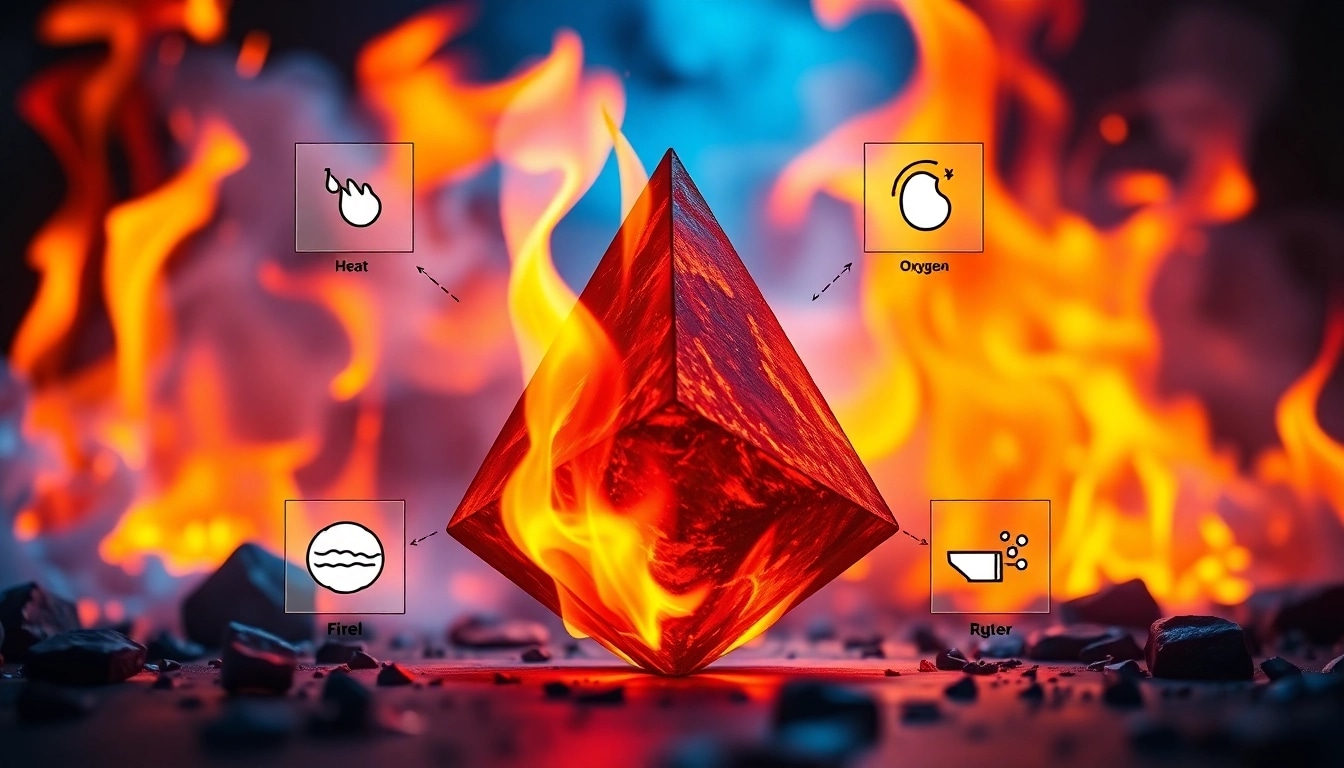
1. Introduction to the Fire Tetrahedron
The concept of the fire tetrahedron is fundamental to understanding how fire works and how it can be effectively managed. As fire safety becomes increasingly paramount in various industries, a grasp of the fire tetrahedron assists in both prevention and control. This tetrahedron consists of four crucial elements: heat, fuel, oxygen, and the chemical reaction that takes place during combustion. Together, these elements interact to create and sustain fire, making it critical for professionals in fire safety, engineering, and related fields to comprehend their dynamics.
a. Definition and Importance
The fire tetrahedron extends the traditional fire triangle concept by including a fourth element that is necessary for fire to exist: the chemical chain reaction. The inclusion of this element emphasizes that simply removing heat, fuel, or oxygen is not always sufficient; one must also consider the reactions that enable fire to propagate. Understanding the fire tetrahedron is vital for developing effective fire prevention strategies, emergency response plans, and fire safety education programs.
b. Historical Development of the Concept
The idea of fire being dependent on multiple components dates back to ancient times. However, it was not until the mid-20th century that the fire tetrahedron was formally recognized by fire scientists and safety professionals. Researchers and firefighters began to note that while the presence of heat, fuel, and oxygen was necessary for fire ignition and maintenance, the chemical reactions taking place were equally important. Over time, this insight led to more nuanced fire safety protocols and better firefighting technologies.
c. Real-Life Applications
The practical applications of the fire tetrahedron are widespread. In construction, knowledge of material flammability and how they interact with heat and oxygen leads to safer design choices. In firefighting, understanding the tetrahedron allows for the development of targeted extinguishing methods, essentially enabling responders to focus on interrupting the chemical reaction or removing one of the other three elements. Additionally, industries such as manufacturing, oil and gas, and forestry utilize the principles of the fire tetrahedron to optimize safety and reduce fire risks.
2. Understanding the Four Elements
a. Heat: The Catalyst for Fire
Heat is the energy that raises a material's temperature to its ignition point. It serves as the catalyst for combustion, a process that can initiate through a variety of means, including friction, electrical sparks, and chemical reactions. Understanding the sources of heat in various environments allows safety professionals to implement controls, such as limiting ignition sources in areas where flammable materials are present, thereby minimizing the risk of fire.
b. Fuel: Types and Characteristics
Fuel can be any combustible material, ranging from solids (like wood, paper, and textiles) to liquids (like gasoline or alcohol) and gases (like propane or natural gas). Each type of fuel has distinct characteristics, such as flash point, ignition temperature, and combustion efficiency. By comprehensively understanding these characteristics, fire safety experts can devise targeted strategies for fire prevention and response, optimizing the use of extinguishing agents based on the type of fuel involved.
c. Oxygen: The Essential Ingredient
Oxygen is necessary for combustion, typically supplied by the atmosphere, which contains approximately 21% oxygen by volume. Certain chemical reactions that support combustion require higher concentrations of oxygen, which can be found in specific industrial processes. Monitoring and managing oxygen levels in environments with increased fire risks, such as chemical plants or confined spaces, is essential for mitigating potential fire hazards.
3. The Chemical Chain Reaction
a. How Fire Propagates
Fire propagation occurs through a series of exothermic reactions where reactants (fuel and oxygen) combine under heat to produce products (gas and heat energy). The generation of heat during these reactions can sustain or even intensify the fire, creating a feedback loop. For instance, when wood burns, it releases gases that can ignite and produce additional heat, causing further combustion and potential spread.
b. Role of Chemical Reactions in Fire
The chemical reactions that drive fire involve the oxidation of fuel. Different fuels have unique combustion pathways, influencing factors like temperature, smoke production, and flame color. Chemical firefighting techniques—using various agents to interrupt these reactions—are critical in extinguishing fires effectively. Research into these chemical processes contributes to developing new fire retardants and firefighting strategies that enhance safety and efficiency.
c. Implications for Fire Safety
Understanding the chemical reactions involved in fire can radically affect fire safety initiatives. For example, knowing that certain fire extinguishers work by smothering the fire, cooling the fuel, or interrupting the chemical process allows professionals to choose the appropriate method of fire suppression according to the situation. Additionally, this knowledge guides the design of fire prevention systems that can effectively disrupt the conditions necessary for fire propagation.
4. Fire Safety Measures Based on the Tetrahedron
a. Preventing Fire by Removing Elements
One of the most effective means of preventing fire is to eliminate one of the four elements of the fire tetrahedron. For instance, in environments where flammable materials are present, controlling heat sources—such as electrical equipment and open flames—minimizes ignition risks. Furthermore, employing non-combustible materials in construction and storage can prevent fuel from sustaining a fire. Essentially, preventing fire starts with understanding and manipulating the components that allow it to flourish.
b. Fire Extinguishment Techniques
Fire extinguishment can be achieved through various techniques based on the nature of the fire. For example, water is commonly used to cool the fire (removing heat), while foam and dry chemical extinguishers work by smothering the fire (removing oxygen) or interrupting the chemical chain reaction. Training firefighters in these methods is crucial, as proper knowledge leads to quicker, more effective responses, ultimately saving lives and property.
c. Importance of Training and Awareness
Education and training are fundamental to successful fire safety. Personnel should be equipped with knowledge regarding the fire tetrahedron and the specific methods to control and extinguish fires effectively. Fire drills, awareness programs, and ongoing educational sessions reinforce this information, ensuring that all employees understand the risks and the procedures for minimizing them. By fostering a culture of safety, organizations can significantly reduce the chances of fire incidents.
5. Advanced Concepts and Future Research
a. Innovations in Fire Safety Technology
As technology evolves, so too do the strategies for fire prevention and response. Advances in sensor technology, for example, allow for the real-time monitoring of temperature and chemical compositions in environments at risk for fire, unlocking new ways to manage potential ignition sources. Novel fire suppression systems that leverage emerging materials and techniques—like air-based fire suppression systems—have shown promise in enhancing workplace safety and efficiency.
b. Environmental Impact and Fire Studies
With increasing concern regarding the environmental impact of fires, research has expanded toward understanding the ecological effects of various firefighting agents and methods. Some studies emphasize the need to develop eco-friendly fire suppression agents that do not release hazardous chemicals into the environment, ensuring that fire management practices align with sustainability initiatives. These considerations are becoming integral to fire protection strategies.
c. Future Directions in Fire Research
Future research in fire dynamics focuses on understanding the complexities of fire behavior in real-world conditions, including how various materials and environments contribute to fire development and spread. Investigating the applications of artificial intelligence for predictive modeling of fire incidents is also gaining traction. Such innovations hold the potential to radically transform fire safety practices and policies across industries, establishing new benchmarks for protection and risk management.